

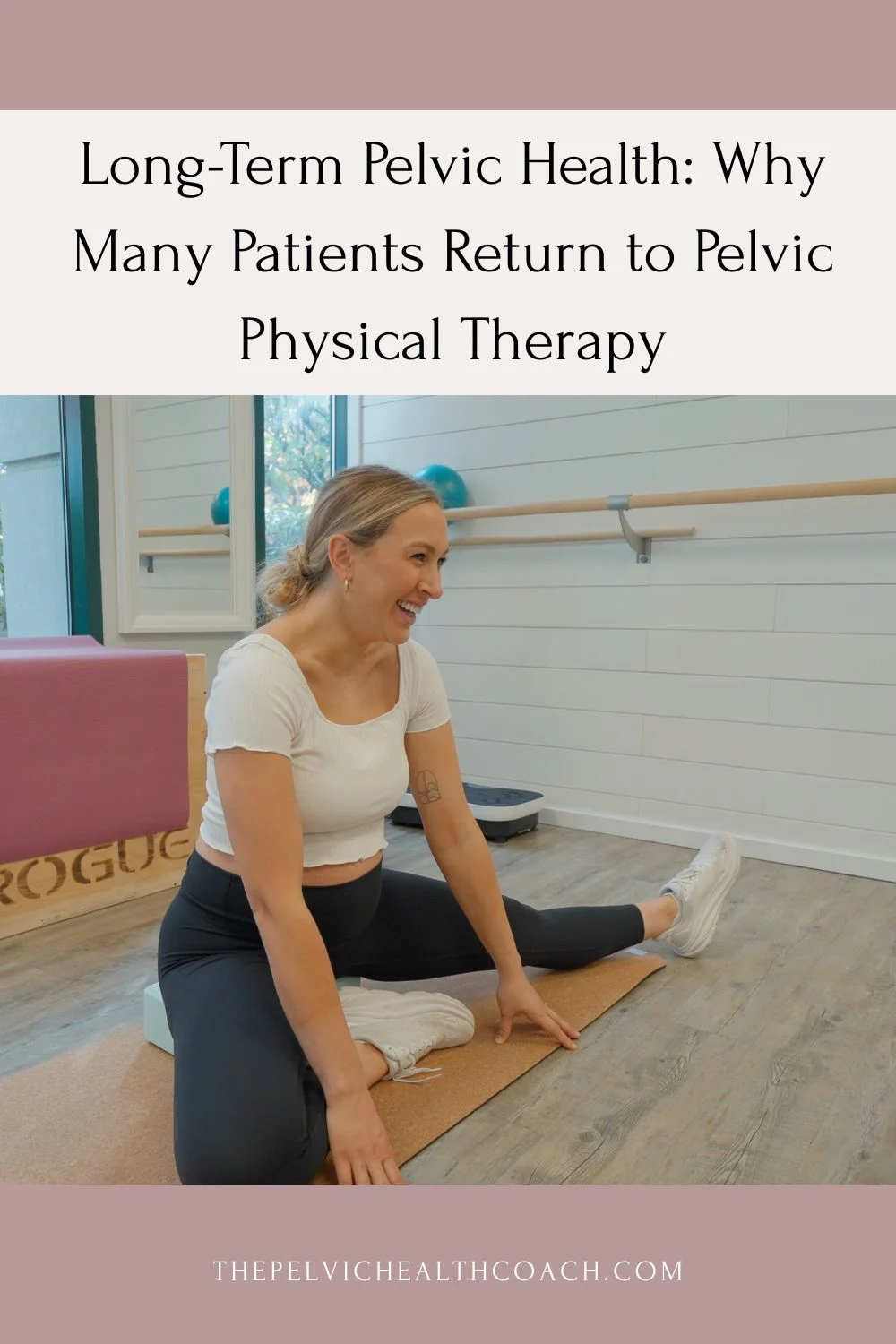
Pelvic Health Is a Long Game: Why Reassessments Are a Normal Part of Care
The beginning of a new year often brings a pause. After the pace of the holidays, many people notice subtle changes in their body. Things don’t feel bad, but they don’t feel quite right either. Maybe a familiar symptom has returned. Maybe movement feels different. Maybe something just feels off.
This doesn’t mean you’ve failed—and it doesn’t mean you need to start over.
At Pinnacle Women’s Therapeutics, we see the New Year as an opportunity to re-center, not reset. Pelvic health, like overall health, is not something you complete once and move on from. It’s something that evolves over time, shaped by life stages, stress, movement, and the demands placed on your body.
Pelvic Health Is Not a “One-and-Done” Journey
Many people seek pelvic physical therapy for a specific concern—pelvic pain, bladder leakage, prolapse symptoms, low back or hip pain, pregnancy-related discomfort, or postpartum recovery. With the right care, these concerns often improve significantly.
That improvement matters. It means the work was effective. But it does not mean your body stops adapting.
Pelvic health is influenced by many factors over time, including:
- Pregnancyand postpartum changes
- Perimenopauseand aging
- Stressand nervous system load
- Injury, illness, or changes in activity
- Shifts in work, caregiving, or daily routines
When someone is discharged from physical therapy, it simply means that at that point in time, their goals were met and they had the tools they needed. It does not mean their body will never need guidance again.
Long-term pelvic health is not about constant treatment. It’s about understanding how your body responds—and knowing when a check-in could be supportive.
Why Many Patients Return to Pelvic Physical Therapy
One of the most common questions we hear is:
“I’ve already done pelvic PT—should I really come back?”
The answer is often yes, and not because something went wrong.
Many patients return months or even years later because something has changed:
- A previous symptom has resurfaced
- A new life phase has begun
- Stress levels are higher than before
- Movement feels less coordinated or more effortful
- They want reassurance or preventative guidance
Returning for a reassessment does not mean starting over. It does not automatically lead to weekly visits or long-term care. In many cases, a reassessment is brief and focused—designed to clarify what your body needs now, not repeat what you’ve already done.
Reassessments are a normal and healthy part of long-term care.
Pelvic Health Is a Long Game
Unlike short-term injuries, pelvic health is influenced by patterns that develop over years. How you breathe, how you move, how you manage pressure, and how your nervous system responds to stress all play a role.
This is why pelvic health works best when viewed through a long-term lens.
Rather than asking, “How do I fix this quickly?”
A more helpful question is, “What does my body need in this season?”
That mindset allows for flexibility. Some seasons require hands-on care. Others require education, awareness, and small adjustments. There is no single endpoint—only forward movement.
What Makes Pinnacle’s Approach Different
At Pinnacle, pelvic physical therapy is not about chasing isolated symptoms or labeling muscles as simply “weak” or “tight.” Our approach is holistic and whole-body, grounded in understanding how systems work together.
We consider:
- How the breath, core, and pelvic floor coordinate
- How posture and alignment affect pressure and movement
- How coordination patterns developed over time
- How stress and lifestyle factors influence function
- How to build confidence and self-awareness, not dependence
Our goal is not to keep patients in care indefinitely. Our goal is to help you understand your body well enough to move forward with clarity—knowing when support is helpful and when you’re equipped to manage things independently.
A Calmer New Year Perspective on Pelvic Health
January often comes with pressure to do more: more routines, more discipline, more change. But for many women, this creates stress rather than meaningful progress.
A calmer approach focuses on re-centering. Re-centering might look like:
- Noticing how your body feels day to day
- Letting go of strategies that no longer fit your life
- Seeking clarity rather than intensity
- Making small, sustainable adjustments
In pelvic health, subtle shifts are often the most powerful. A small change in breathing, movement awareness, or coordination can support your body far more effectively than pushing harder.
The New Year doesn’t require an overhaul. Often, it simply invites attention.
What a Pelvic PT Reassessment Might Look Like
If you’ve completed pelvic physical therapy in the past, a reassessment is usually different from your initial experience.
A typical reassessment may include:
- Reviewing current symptoms, goals, and concerns
- Assessing movement, coordination, and alignment
- Identifying what has changed and what has stayed the same
- Providing education and reassurance
- Updating home strategies to match your current needs
Many patients are surprised to find that a reassessment leads to clarity rather than a long treatment plan. Some benefit from a short follow-up period, while others leave with reassurance and guidance they can apply independently.
A reassessment is about direction, not dependency.
There Is No Finish Line in Health—Only Forward Movement
Health does not have a final destination.
There is no moment where the body stops adapting. No permanent state of arrival. Instead, health unfolds in phases—shaped by life, stress, movement, and time.
Pelvic physical therapy is one form of support along that continuum. Its role is not to create reliance, but to help you understand what kind of care fits your body right now.
Considering a Pelvic PT Check-In? We’re Here to Help.
If you’ve worked with us in the past and are noticing a shift in how your body feels, a pelvic physical therapy reassessment can help you re-center and understand what your body needs in this season—often without ongoing visits.
If you’re new to pelvic physical therapy and feeling unsure where to start, an initial evaluation can offer clarity, education, and a thoughtful plan forward—without pressure or urgency.
Whether this is a return visit or your first step, our goal is the same: to help you move forward with confidence and support that fits your life right now.
👉 Contact Pinnacle Women’s Therapeutics to learn more or schedule a consultation.